

Brother Sir Ernest Shackleton
1874-1922
Irish born Antarctic explorer leading three expeditions to the Antarctic for Britain and a prominent figure during the “Heroic Age of Antarctic Exploration”. He is best known for the harrowing survival story of the Endurance.
Presented to the Lodge Jun. 2026
Sir Ernest Shackleton was born in Ireland in 1874 and educated in London. Following his education he joined the merchant navy at 16 and began his Antarctic exploration in 1901 as third officer on Captain Robert Falcon Scott’s Discovery.


Captain Scott’s Discovery

Shackleton was Initiated into Navy Lodge No. 2612 on July 9th, 1901, just prior to starting his career in exploration.
He was Passed at an emergency meeting on November 2nd, 1911 and Raised at another emergency meeting on May 30th, 1913

Bookplate from Shackleton’s personal library
Endurance expedition

The initial plan was to sail to Antarctica and cross the continent on foot, reaching the South Pole in December of 1915 and utilizing supply caches left by a sister ship Aurora on the second half of the crossing and being picked up by Aurora to return home.


The actual voyage ended up completely different than the initial plan.
In January of 1915 Endurance gets stuck in pack ice. The crew is held in place and forced to float with the flow of ice in sight of their goal of Antarctica. They are stuck in the ice for 9 months.

In October of 1915 the pack ice Endurance is trapped in begins to compact, crushing the hull and any chances the crew would have of sailing home.
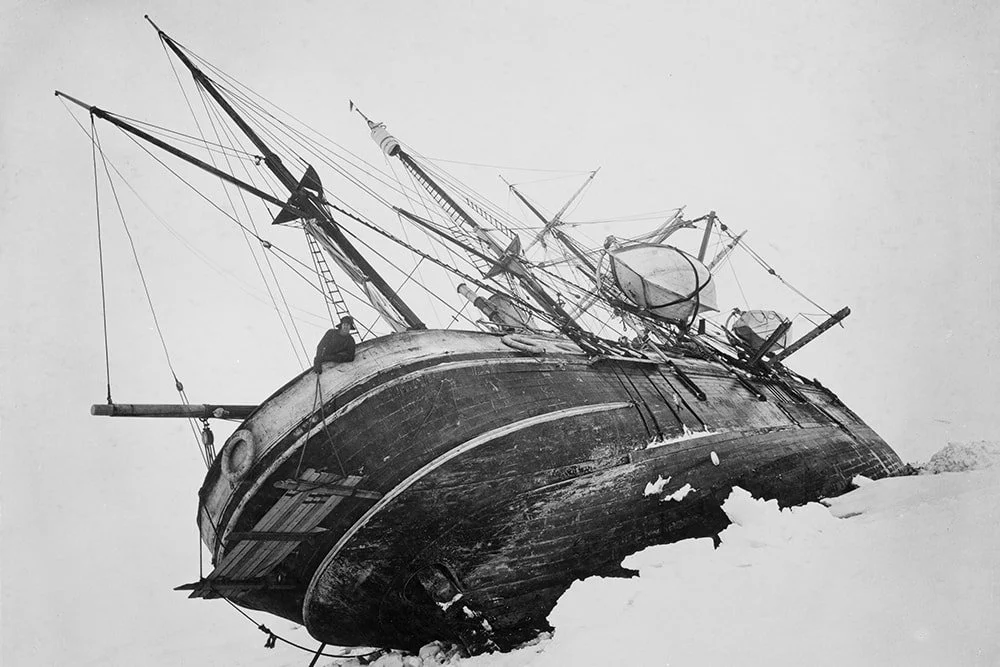
The crew begins to evacuate the ship and salvaging as many supplies as possible until, in November of 1915, Endurance sinks

From November 1915 until April 1916 the crew lives in temporary camps on the floating ice sheets during the arctic winter until the ice begins to thin and shift in April as spring approaches

The crew are determined to reach Elephant Island, the uninhabited island off the tip of the Antarctic Peninsula, and from there reach the inhabited islands farther North. They take two cutters and a whale boat with as many supplies as they can carry and row from the pack ice to Elephant Island in April of 1916


The crew manages to survive the trip to Elephant Island and arrives to a desolate rocky island that is still hundreds of miles from the nearest sign of civilization. Six men board a 22ft whale boat James Caird and set off for an 800 nautical mile row through the most dangerous area of ocean on Earth, the Drake Passage.
While these six men leave for help, the remaining crew must take shelter under the up-turned boat and wait an undetermined amount of time, hoping the crew of the James Caird both survive and are able to return with rescue.


The crew of the James Caird manage to survive the 800 nautical mile journey in under 48 hours, arriving at South Georgia Island. They land on the western coast of the island which is uninhabited. They must now leave their boat and supplies and cross the width of South Georgia Island on foot, climbing a mountain in the process. This is a feat that has never been done before, and they are managing it after rowing through the Drake Passage and more than a year stuck on ice.

The men finally make it across the width of the island and stumble into the whaling port town they left from over one year prior. They request aid from the United Kingdom and her allies, but WWI had started while they were on their expedition and no naval ships can be spared.
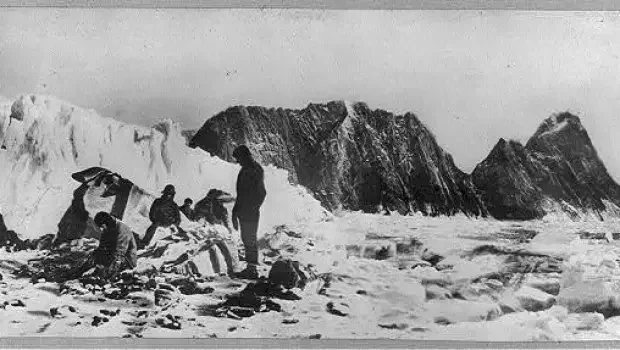
While recovering on South Georgia Island, Shackleton arranges multiple independent rescue attempts will all being stalled or called off when the ships get stuck or damaged in the ice. Shackleton eventually meets brother Freemason Luis Pardo, the Lt. Commander of a Chilean steamer Yelcho. Pardo feels obligated to assist and asks for permission to take the woefully underequipped Yelcho out to attempt to save the men left on Elephant Island.

“When you read this letter, either your son has died, or he has arrived at Punta Arenas with the castaways. I shall not return alone.”
Lt. Commander Luis Pardo to his father
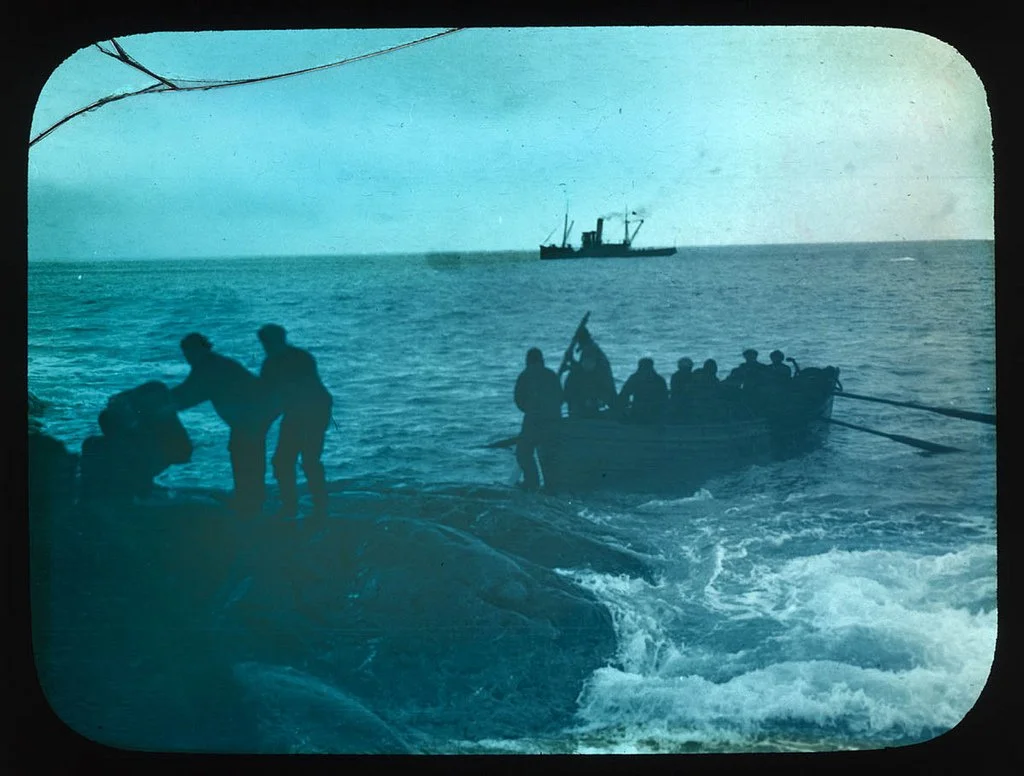
On August 30th, 1916, more than two and a half months since the James Caird departed, the steamer Yelcho piloted by Lt. Commander Pardo arrives at Elephant Island and rescues the remaining men
When the men return to Chile, Bro. Pardo’s mother lodge, Harmony No. 1411 in Valparaiso, held an emergency meeting to welcome Bro. Shackleton and his crew
“Freemasons the world over rejoiced at the successful termination of Brother Shackleton’s endeavors”
Bro. Pardo declined a £20,000 reward stating it was “sufficient enough to have complied with his duty”
In the end, the 27 men left with about 14 months of supplies and spent
~21 months total
1 month sailing through the ice
8 months stuck in pack ice
6 months stranded on ice after the ship sinks
5 months stranded on Elephant Island/rowing for rescue
1 month to sail to Chile
And in the end, not one life was lost.

Statue of Bro. Sir Ernest Shackleton out side the Royal Geographic Society in London

Statue of Bro. Luis Pardo on Elephant Island